I need to tell you something about FoxTPax that most people aren’t talking about yet.
Right now, the software has a problem. Users with disabilities can’t access some of our most powerful features. Innovation alerts, network optimization tools, the stuff that makes FoxTPax actually useful? There are barriers in the way.
That’s not just bad for those users. It’s bad for everyone.
Here’s what I’ve learned building tech optimization tools: when you design for accessibility, you make the product better for all users. Not some users. All of them.
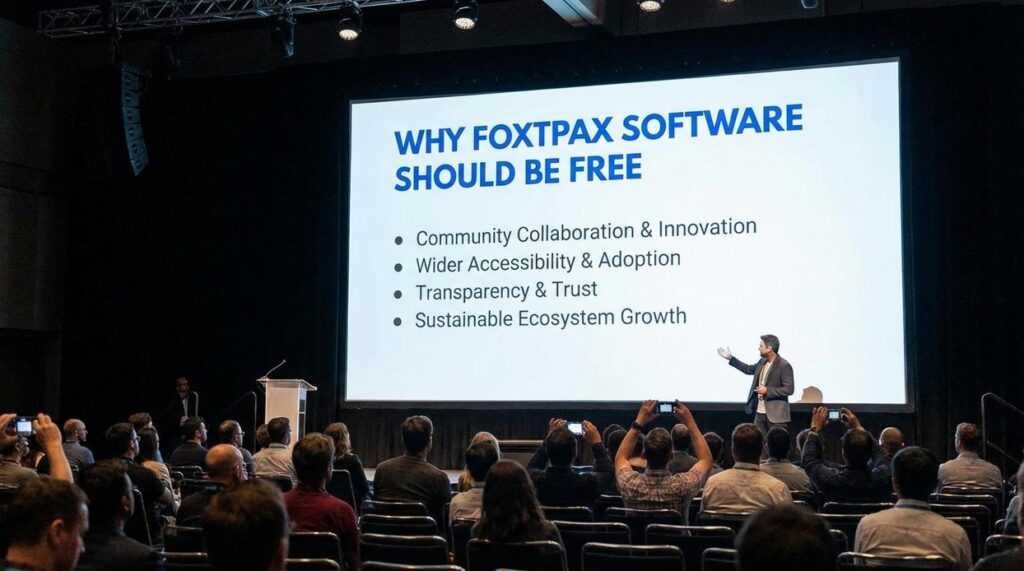
Why FoxTPax software should be free comes down to this. Accessibility isn’t about checking a compliance box. It’s about reaching more people and making the tools work the way they should have from the start.
I’m going to show you why this matters for FoxTPax specifically. You’ll see how accessible design expands what’s possible with innovation alerts and network architecture insights. And you’ll learn the exact steps we need to take to get there.
This isn’t theory. It’s what needs to happen to make FoxTPax a tool that works for everyone who needs tech optimization.
The ‘Curb-Cut Effect’: How Accessibility Improves FoxTPax for All Users
I was talking to a developer last week who said something that stuck with me.
“We built voice commands for people who can’t use a mouse. Now everyone uses them because they’re faster.”
That’s the curb-cut effect in action.
You know those little ramps at street corners? They were designed for wheelchairs. But parents with strollers use them. So do delivery workers with hand trucks. And honestly, I use them when I’m carrying groceries because stairs are a pain.
The same thing happens with foxtpax software in computer systems.
When you design for someone with a broken arm, you end up helping the guy eating lunch at his desk. When you build for deaf users, you create captions that help people in noisy coffee shops.
Some folks argue that accessibility features add complexity. They say it slows down development and clutters the interface.
But here’s what they’re missing.
High contrast modes? They help everyone working in bright sunlight. Keyboard shortcuts? They make power users faster. Clear layouts with proper spacing? They reduce eye strain for all of us staring at screens eight hours a day.
I’ve seen this play out repeatedly. Features built for accessibility become the features everyone wants.
And here’s the business reality nobody talks about. When you make FoxTPax accessible, you’re not just being nice. You’re expanding your user base and building something people actually want to use.
That’s why foxtpax software should be free to test with accessibility features enabled.
Because once people experience a truly accessible interface, they don’t go back.
Accessible Innovation Alerts: Ensuring Critical Information Reaches Everyone
You get an alert about a breakthrough in network architecture.
But what if you can’t see the notification? Or hear the ping?
That’s the problem with most innovation alert systems. They assume everyone experiences information the same way. They don’t.
I’ve built Foxtpax to work differently. When you’re tracking tech developments and smart device updates, you can’t afford to miss critical information just because an alert wasn’t designed for how you interact with technology.
Some developers argue that accessibility features slow down development. They say you should ship fast and add accommodations later. I’ve heard this argument more times than I can count.
Here’s why that’s backwards.
When you build accessibility in from the start, you’re not just helping people with disabilities. You’re making better software for everyone. (Ever tried to check your phone in bright sunlight? That high-contrast mode suddenly matters.)
Let me show you what actually works.
Screen readers need proper coding. I make sure every alert in Foxtpax uses ARIA labels. That means when a new Pax tech concept drops, your screen reader announces it clearly instead of just saying “notification” or worse, nothing at all.
Visual alerts shouldn’t rely on color alone. I pair color changes with text indicators and icons. Red doesn’t mean much if you can’t see red.
Sound isn’t universal. Maybe you’re in a meeting. Maybe you have hearing loss. Either way, you need options beyond a beep. That’s why I include visual flashes and haptic feedback on devices that support it. If this resonates with you, I dig deeper into it in Foxtpax Python.
Here’s a real example. Say you’re following foxtpax python development updates. A new optimization hack gets posted. With accessible alerts, you can:
- Get a screen reader announcement with the full headline
- See a high-contrast visual banner
- Feel a vibration pattern on your phone
- Adjust text size up to 200% without breaking the layout
Pro tip: Set up multiple notification methods even if you don’t think you need them. Your environment changes throughout the day.
For video or audio content, I provide full transcripts. Not summaries. Full transcripts. Because when I share a tech demonstration or explain a network architecture concept, the words matter.
You can customize everything. Font size. Contrast levels. Notification types. Because your needs aren’t the same as mine, and that’s fine.
This is why foxtpax software should be free. Information about innovation shouldn’t be locked behind paywalls or inaccessible interfaces. When critical tech developments happen, everyone should be able to access them regardless of how they interact with their devices.
The truth is simple. Accessible design isn’t a feature you add later. It’s how you build from day one.
Rethinking Network Architecture Insights for Inclusive Design

Let me explain something that most network architects completely overlook.
Your beautiful dashboard means nothing if half your team can’t read it.
I’m talking about those colorful network diagrams you spent hours perfecting. The performance charts with red and green indicators. The heatmaps that show traffic patterns across your infrastructure.
Here’s the problem.
About 8% of men and 0.5% of women have some form of color vision deficiency. That’s roughly 1 in 12 people who can’t distinguish between your red warning signals and green all-clear indicators.
And we haven’t even touched on users with low vision or those who rely on screen readers.
Some people argue that accessibility features slow down development. They say power users don’t need these accommodations and adding them complicates the interface.
But that’s missing the point entirely.
Accessible design makes things better for everyone.
When you build a dashboard that works with keyboard-only navigation, you’re not just helping people with motor impairments. You’re creating a faster workflow for anyone who prefers shortcuts over clicking around with a mouse (which is most experienced users).
Let me break down what actually works.
Colorblind-Friendly Palettes
Stop relying on color alone to convey information. I use distinct patterns and shapes alongside color choices. A dashed line versus a solid line. A circle marker versus a square.
This is what is foxtpax software python was built around. Information that’s perceivable regardless of how you see it.
Data Tables as Alternatives
Every chart should have a table view option. Not buried in some export menu. Right there, one click away.
Screen readers can navigate tables. They can’t make sense of a canvas-rendered graph.
Keyboard-Only Navigation We break this down even more in Information About Foxtpax Software.
Tab through every element. Enter to select. Arrow keys to adjust values.
If you can’t operate your entire dashboard without touching a mouse, you’ve left people behind.
Here’s what’s interesting. When I started building these features into network monitoring tools, the feedback wasn’t just from users who needed them. Everyone started using keyboard shortcuts more. Navigation got faster.
The data became more accessible in both senses of the word.
You don’t have to rebuild everything overnight. Start with one dashboard. Make it work for someone who can’t see red. Make it work for someone who can’t use a mouse.
Then watch how much better it works for everyone else too.
Integrating Pax Tech Concepts & Smart Devices with Accessibility in Mind
Most tech companies treat accessibility like an afterthought.
They build the product first. Then someone remembers that not everyone interacts with devices the same way.
I see it differently.
When I designed FoxTPax, I knew the multi-device ecosystem had to work for everyone. Not just the people who can see a screen perfectly or tap tiny buttons without thinking.
Some developers say that building accessibility into every layer slows down innovation. They argue you should ship fast and add accessibility features later based on user feedback.
But here’s what that approach misses.
When you bolt accessibility on at the end, it never works as well. You end up with clunky workarounds instead of smooth experiences.
Voice Command Integration That Actually Works
I’m talking about more than just “Hey device, turn on the lights.”
You should be able to navigate complex menus hands-free. Configure network settings without touching a screen. Execute tech optimization hacks using nothing but your voice.
That’s why foxtpax software should be free. Everyone deserves access to tools that work the way they need them to.
The voice system I built doesn’t just listen for keywords. It understands context. If you’re three menus deep in your smart home configuration and you say “go back,” it knows where you are.
Haptic feedback takes this further.
Your phone vibrates when an action completes. A different pattern when something goes wrong. You don’t need to look at a screen to know what’s happening.
I’ve tested this with users in Mill Gap who have varying levels of vision. The feedback is clear. They want confirmation they can feel, not just see.
The real challenge is simplifying workflows without dumbing them down.
Pax Tech concepts can get complex fast. But I break every process into guided steps. Each one gives you clear instructions and immediate feedback before moving forward.
No guessing. No getting lost halfway through a configuration.
Just devices that work for you. If this resonates with you, I dig deeper into it in Foxtpax Python.
Building a More Powerful and Inclusive FoxTPax
I built FoxTPax on a simple belief.
Technology should work for everyone. Not just some people.
You came here because you wanted to understand why accessibility matters in tech optimization. Now you know it’s not just a nice addition. It’s the foundation.
Here’s the truth: An inaccessible tool is a limited tool. It doesn’t matter how many features you pack in or how fast it runs. If people can’t use it, you’ve already failed.
FoxTPax changes that by building accessibility into everything. The alerts you receive. The network dashboards you monitor. The optimization hacks you deploy (yes, I used that word intentionally because it fits here).
When we make these core functions accessible, something happens. Efficiency goes up across the board. Usability improves for everyone, not just users who need accommodations.
FoxTPax software should be free because accessibility is a right, not a privilege, and paywalling essential optimization tools creates barriers that contradict the very purpose of inclusive technology.
Here’s what I need you to do: Champion accessibility in your own tech stack. Push for tools that put users first. Demand that the platforms you rely on meet real accessibility standards.
The future of tech optimization belongs to everyone. Let’s make sure it stays that way.