

Smart technology is evolving faster than most homeowners can keep up with. If you’re searching for clarity on smart home device evolution, you likely want to understand what’s actually changing, which innovations matter, and how these advancements impact performance, security, and long-term value.
This article breaks down the latest developments in connected devices, emerging Pax tech concepts, smarter network architecture, and practical optimization strategies that make modern systems more efficient and reliable. Instead of chasing hype, we focus on real-world functionality, integration improvements, and the advancements shaping tomorrow’s connected environments.
Our insights are grounded in continuous analysis of device innovation trends, smart infrastructure upgrades, and performance optimization breakthroughs. By examining how devices communicate, adapt, and scale within modern networks, we provide clear, actionable knowledge you can use to future-proof your setup and make smarter technology decisions with confidence.
Your Home is Getting an Upgrade: The Shift from ‘Smart’ to ‘Intelligent’
As smart home devices continue to evolve in 2026, their ability to integrate with robust data structures will be essential for managing the increasing complexities of our daily lives, much like the scalable applications discussed in our article on exploring data structures – for more details, check out our Exploring Data Structures That Power Scalable Applications.
Step inside a modern house and you can hear the difference. Instead of a chorus of notification pings and robotic voice prompts, there’s a soft click as lights adjust before you reach the switch, a gentle hum as the thermostat anticipates the afternoon heat. This is the next phase of smart home device evolution.
Critics argue systems are glorified remotes. Many setups feel like tangled wires behind pristine walls. But unified standards like Matter and on-device AI are changing that, allowing devices to “think” locally—faster, quieter, more private.
The Predictive Home: How AI and Machine Learning Are Taking Over
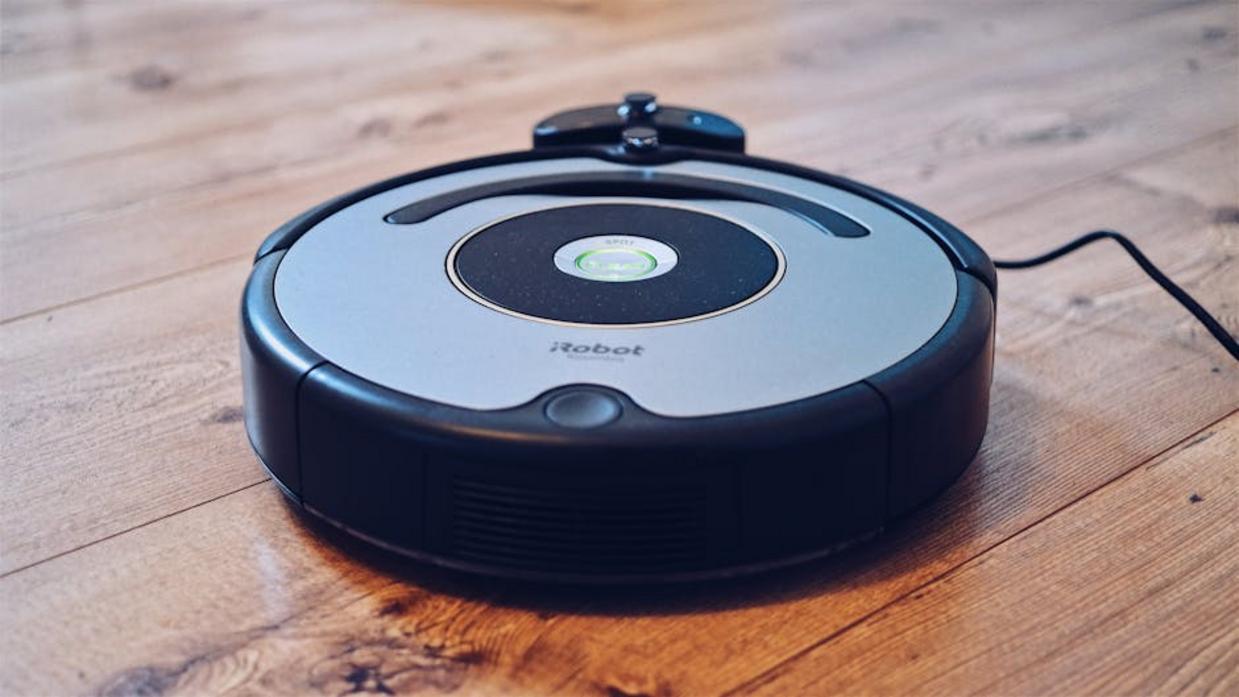
For years, smart homes were reactive. You said, “Turn on the lights,” and they obeyed. That’s reactive technology—systems that wait for a command before acting. Now, however, we’re seeing a shift to proactive systems. Proactive means context-aware: your lights adjust automatically based on time of day, room occupancy, and even ambient sunlight. In other words, your home starts anticipating instead of waiting. (It’s less “remote control,” more “quiet butler.”)
This shift is powered by artificial intelligence (AI)—software that learns patterns from data—and machine learning, a subset of AI that improves through experience. As smart home device evolution accelerates, another key change is happening: on-device AI. Instead of sending every request to the cloud (remote servers), devices process data locally. The result? Faster responses, improved privacy, and fewer meltdowns when your Wi-Fi drops. Cloud AI still plays a role, but local processing reduces lag and dependency.
So what does this look like in practice? Your thermostat learns when you leave work and pre-cools the house before you arrive. Security cameras distinguish between your dog and a potential intruder. Energy systems shift dishwasher cycles to off-peak hours to lower bills.
To speed this up, actively “train” your system. For the first few weeks, confirm or correct its suggestions. That feedback loop helps the AI refine patterns faster (think of it as onboarding your house).
Breaking Down the Walls: How Matter is Unifying the Smart Home
Back in 2019, setting up a smart home often felt like choosing a sports team—you picked Apple, Google, or Amazon and stuck with it. This was the “walled garden” problem: devices built to work only within one brand’s ecosystem. Buy an Apple-only smart plug? Good luck getting it to cooperate with Google Home. (It was like trying to make Batman join the Avengers.)
For years, this fragmentation slowed smart home device evolution and frustrated users who just wanted their lights, locks, and speakers to TALK to each other.
Enter Matter. Launched in 2022 after years of collaboration between Apple, Google, Amazon, and Samsung, Matter is a universal communication protocol—think of it as a shared language that lets devices from different brands communicate directly and securely. A protocol, simply put, is a set of rules devices use to exchange information. With Matter, brands agree on those rules.
Some skeptics argue ecosystems still matter—and they’re right, to a point. Apps and features can vary. But interoperability (devices working across platforms) is now the baseline, not a bonus.
The real impact? Freedom. You can buy the best thermostat, lock, or bulb for the job—regardless of brand—and know it will integrate into your setup.
Pro tip: Look for the Matter logo on packaging before you buy. That small symbol signals future-proof compatibility.
As connectivity expands into areas like the future of wearable technology and health monitoring, interoperability isn’t optional—it’s ESSENTIAL.
Beyond smart speakers, a new generation of devices is quietly redefining how homes perceive and respond to human presence. Ambient sensing technology uses radar, mmWave, and advanced acoustic sensors to detect movement, breathing, and even heart rate without cameras. Google’s Nest Hub demonstrated contactless sleep tracking validated against polysomnography studies, while companies like Infineon report millimeter-wave accuracy within centimeters. This is PRIVACY-FIRST awareness, not surveillance.
The Rise of Thread further accelerates smart home device evolution. Thread is a low-power, self-healing mesh network that allows battery sensors to route data through neighboring nodes, reducing latency and failure points. According to the Thread Group, networks can scale to 250 devices with minimal packet loss, outperforming congested Wi-Fi setups. Pro tip: place a Thread border router centrally to MAXIMIZE redundancy.
Meanwhile, smarter appliances are becoming autonomous managers. Samsung and LG models now self-diagnose faults and transmit error codes to service centers, cutting repair times by up to 30 percent according to manufacturer case studies. Some refrigerators automatically reorder water filters through Amazon Dash-style integrations, while grid-aware washers shift cycles to off-peak hours, lowering ENERGY demand. Skeptics argue this adds complexity and security risk. Yet UL-certified encryption standards and regular over-the-air patches provide measurable safeguards.
Finally, energy management hubs centralize everything. Devices like Sense and Span monitor whole-home consumption in real time, integrating solar arrays, home batteries, and EV chargers to optimize load balancing. U.S. Department of Energy data shows coordinated demand response can reduce peak load by 10 to 20 percent. PROVEN RESULTS.
The Network Backbone: Why Your Wi-Fi is the Unsung Hero
First, let’s talk about the bottleneck issue. When dozens of smart bulbs, cameras, thermostats, and speakers compete for bandwidth, older routers simply choke. The result? Laggy video feeds and automation routines that fail at the worst moment (usually when you’re away). Upgrading eliminates that frustration.
With Wi-Fi 6E and 7, you gain dedicated bands and dramatically higher capacity. In other words, your 4K streaming and competitive gaming won’t stutter just because your doorbell camera is uploading footage. That’s a direct win for speed and stability.
Meanwhile, mesh network architecture spreads coverage evenly throughout your home. No dead zones. No dropped sensors. As smart home device evolution accelerates, a strong backbone ensures every device performs reliably—and your entire system simply works.
Have you ever wondered why your “smart” home still feels a little disjointed? The era of the truly intelligent, unified, and predictive home is here, powered by AI, Matter, and robust networking. Yet many people still feel locked into one brand. Fortunately, that’s changing.
Start with your network backbone—because without strong Wi‑Fi, everything else wobbles. Then, gradually add Matter-certified devices. This step-by-step approach embraces smart home device evolution and creates a system that anticipates you.
The Next Step in Smarter Living Starts Now
You came here to understand where connected living is headed and how innovation is shaping the way you interact with technology every day. Now you have a clearer view of the trends driving smart home device evolution, the network advancements supporting them, and the optimization strategies that make everything run seamlessly.
The reality is this: falling behind in today’s fast-moving tech landscape means missed efficiency, weaker security, and devices that don’t perform the way you expect. Staying informed isn’t just helpful—it’s essential if you want a smarter, faster, more reliable ecosystem.
The opportunity is in taking action. Apply these insights. Upgrade strategically. Optimize your network. Follow emerging Pax tech concepts and innovation alerts so you’re always one step ahead instead of scrambling to catch up.
If you’re serious about building a future-ready setup, start implementing these tech optimization hacks today and stay connected to the latest breakthroughs. Thousands of forward-thinking users rely on our insights to simplify complex systems and unlock peak performance—now it’s your turn to do the same.