

If you’re searching for a clear, practical breakdown of cybersecurity frameworks fundamentals, you’re likely trying to cut through technical jargon and understand what truly protects modern systems. With cyber threats evolving alongside smart devices, connected networks, and emerging tech ecosystems, knowing the core structure behind security strategies is no longer optional—it’s essential.
This article is designed to give you a focused, no-fluff explanation of how cybersecurity frameworks work, why they matter, and how they support resilient network architecture and optimized tech environments. We examine widely adopted standards, real-world implementation strategies, and the principles that underpin effective risk management.
To ensure accuracy and relevance, this guide draws on established industry frameworks, insights from leading security researchers, and current best practices used across enterprise and innovation-driven environments. By the end, you’ll have a grounded understanding of the foundational elements that strengthen digital infrastructure and support long-term security readiness.
Cybersecurity today feels like standing in a storm of alerts, tools, and acronyms. Firewalls, endpoint detection, zero trust—each promises safety, yet together they create confusion. In simple terms, cybersecurity frameworks are structured guidelines that help organizations identify, protect, detect, respond, and recover from threats. Instead of reacting to every new headline breach, frameworks offer a roadmap for managing risk systematically. Think of them as blueprints rather than gadgets (because buying more tools is not a strategy). This guide explains cybersecurity frameworks fundamentals, breaking complex ideas into practical steps so you can build a calmer, proactive defense. With clarity and confidence.
What is a Cybersecurity Framework? The Blueprint for Digital Security
As organizations seek to strengthen their defenses against evolving cyber threats, understanding cybersecurity frameworks becomes crucial, especially in light of emerging technologies like quantum computing, which could redefine security paradigms, as explored in our article on Quantum Computing Milestones: What They Mean for Businesses.
A cybersecurity framework is a set of documented policies, procedures, and controls that define how an organization protects its digital assets. Think of it like an architectural blueprint for a building. The blueprint doesn’t tell you which brand of hammer to buy, but it clearly shows where the walls, wiring, and plumbing must go to create something safe and functional. In the same way, a framework maps out how security should be structured—without dictating every tiny tool or product.
At its core, the goal isn’t to eliminate all risk (that’s like trying to build a house that can’t ever be damaged by weather—nice idea, impossible in reality). Instead, it helps manage risk in a repeatable, measurable, and business-aligned way. That’s where cybersecurity frameworks fundamentals come into play: identifying what needs protection, assessing threats, and responding consistently.
It’s important to understand what a framework is not. It’s not a piece of software you install, and it’s not a rigid, one-size-fits-all checklist. It’s a flexible guide for smart decision-making—more like a GPS for security strategy than a locked instruction manual.
The 5 Essential Functions of Any Effective Framework
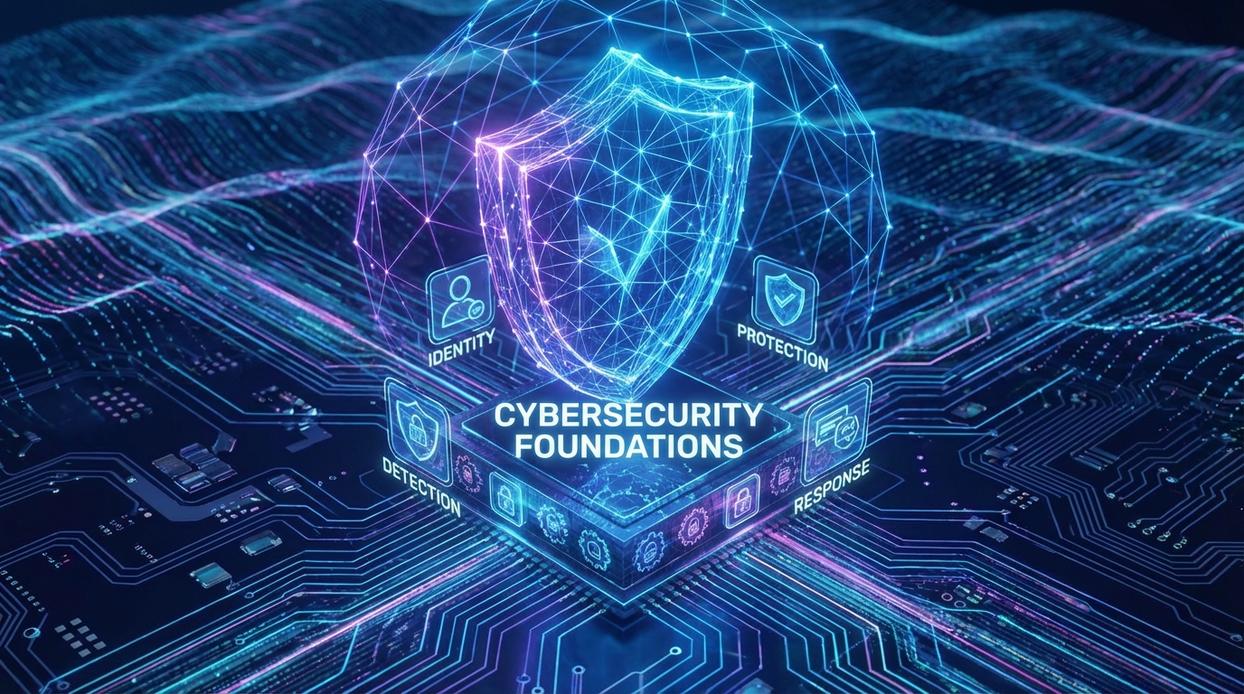
Every solid framework—whether for cybersecurity, operations, or even personal productivity—rests on five core functions. The NIST Cybersecurity Framework makes this especially clear. In my opinion, it’s one of the cleanest examples of cybersecurity frameworks fundamentals done right: simple, memorable, and practical. If you understand these five pillars, you understand the architecture of resilience.
1. Identify
Identify is about knowing what you actually have. Hardware, software, data, users, vendors—everything. This function maps your environment and defines associated risks. If you don’t know a server exists, you can’t protect it (and attackers love “forgotten” assets). Think of it like taking inventory before buying insurance. Clarity creates control. Without identification, every other function rests on guesswork.
2. Protect
Protect focuses on safeguards that limit impact. This includes access controls, encryption, employee awareness training, and protective technologies like firewalls or endpoint detection. Some argue heavy protection slows innovation. I disagree. Smart safeguards enable innovation by reducing catastrophic risk. It’s the seatbelt analogy—no one drives less because they buckle up. Protection doesn’t eliminate threats; it reduces blast radius.
3. Detect
Detect means discovering cybersecurity events quickly. Continuous monitoring, anomaly detection, and system logging help identify breaches in real time. Critics say constant monitoring feels intrusive or expensive. But delayed detection costs far more (IBM reports breaches with longer detection times cost significantly more on average). Speed here is survival. You can’t fix what you don’t see.
4. Respond
Respond covers actions after detection: containment, forensic analysis, and communication. This includes predefined response plans so teams aren’t improvising mid-crisis (which rarely ends well). Some believe response planning is pessimistic. I see it as disciplined realism. Prepared teams move with precision instead of panic.
5. Recover
Recover is resilience in action. Backups, disaster recovery plans, and iterative improvements restore operations and strengthen defenses. It’s not just bouncing back—it’s bouncing forward. For deeper architectural context, explore understanding the core principles of modern system architecture. Recovery proves a framework isn’t just defensive—it’s adaptive.
Why Adopt a Framework? From Compliance to Confidence
A few years ago, I worked with a team that only fixed security issues after something broke. (Yes, it was as stressful as it sounds.) One phishing attack later, leadership finally asked for structure. That’s when we turned to cybersecurity frameworks fundamentals—and everything changed.
Improved Risk Management
Instead of patching holes randomly, we prioritized risks based on business impact. A framework—meaning a structured set of security guidelines—helped us focus on what actually mattered. Pro tip: rank assets by revenue impact first, not technical complexity.
Streamlined Compliance & Communication
Frameworks create a shared language. When auditors asked about GDPR or HIPAA safeguards, we mapped controls directly to requirements. Executives finally understood our posture without jargon (a minor miracle).
Enhanced Security Culture
Security stopped being “IT’s problem.” With clear standards, every department knew its role. The shift was subtle but powerful—less blame, more ownership.
Some argue frameworks add bureaucracy. I’ve seen the opposite: clarity builds confidence.
A Glimpse into the Landscape: NIST, ISO, and CIS
When comparing security standards, it helps to see them side by side rather than as competing checklists. Each serves a different purpose within cybersecurity frameworks fundamentals.
NIST Cybersecurity Framework (CSF) is often the starting point, especially in the U.S. It’s flexible and risk-based, meaning organizations can scale controls up or down depending on size and complexity. In other words, it’s more of a strategic map than a rigid rulebook.
ISO/IEC 27001, by contrast, is certification-driven. If NIST is guidance, ISO is proof. Companies pursue it to demonstrate audited security maturity to partners and customers (think of it as the “ISO badge” of trust).
CIS Controls are far more prescriptive:
- Prioritized technical safeguards
- Clear implementation steps
- Action-oriented security tasks
So, NIST defines what good security looks like, ISO validates it, and CIS tells you how to execute. Together, they form a practical, layered defense approach.
Putting Principles into Practice: Your Path Forward
Cybersecurity feels overwhelming because threats evolve daily. But cybersecurity frameworks fundamentals turn chaos into a structured, repeatable process. Instead of guessing, you follow clear functions that prioritize risk and resources.
Start with Identify. Before buying tools or rewriting policies, map what matters most:
- Critical systems that run operations
- Sensitive data (customer, financial, intellectual property)
- Key vendors and integrations
- Existing security controls and gaps
This inventory reveals what truly needs protection and where exposure exists. Once you see your environment clearly, every next step—protect, detect, respond—becomes smarter and more defensible. Stay proactive, review regularly.
Build a Stronger, Smarter Security Strategy Today
You came here to understand how to strengthen your security posture and make sense of modern protection strategies. Now you have a clearer grasp of cybersecurity frameworks fundamentals and how they create structure, reduce risk, and align your technology with real-world threats.
The reality is that fragmented tools and reactive fixes leave gaps attackers are quick to exploit. Without a solid framework, even advanced systems can fail at the worst possible moment. A structured, proactive approach is no longer optional—it’s the backbone of resilient digital infrastructure.
The next step is simple: audit your current security setup against proven framework standards, identify weaknesses, and implement layered protections that scale with your network. Don’t wait for a breach to expose vulnerabilities.
If you want faster threat detection, smarter architecture decisions, and optimized protection strategies trusted by forward-thinking tech leaders, start applying these principles now. Take action today—review your framework alignment, strengthen weak points, and turn your security strategy into a competitive advantage.